

2026 Special Mention - Budapest
Budapest is recognised for demonstrating how meaningful urban transformation can be achieved with limited resources.
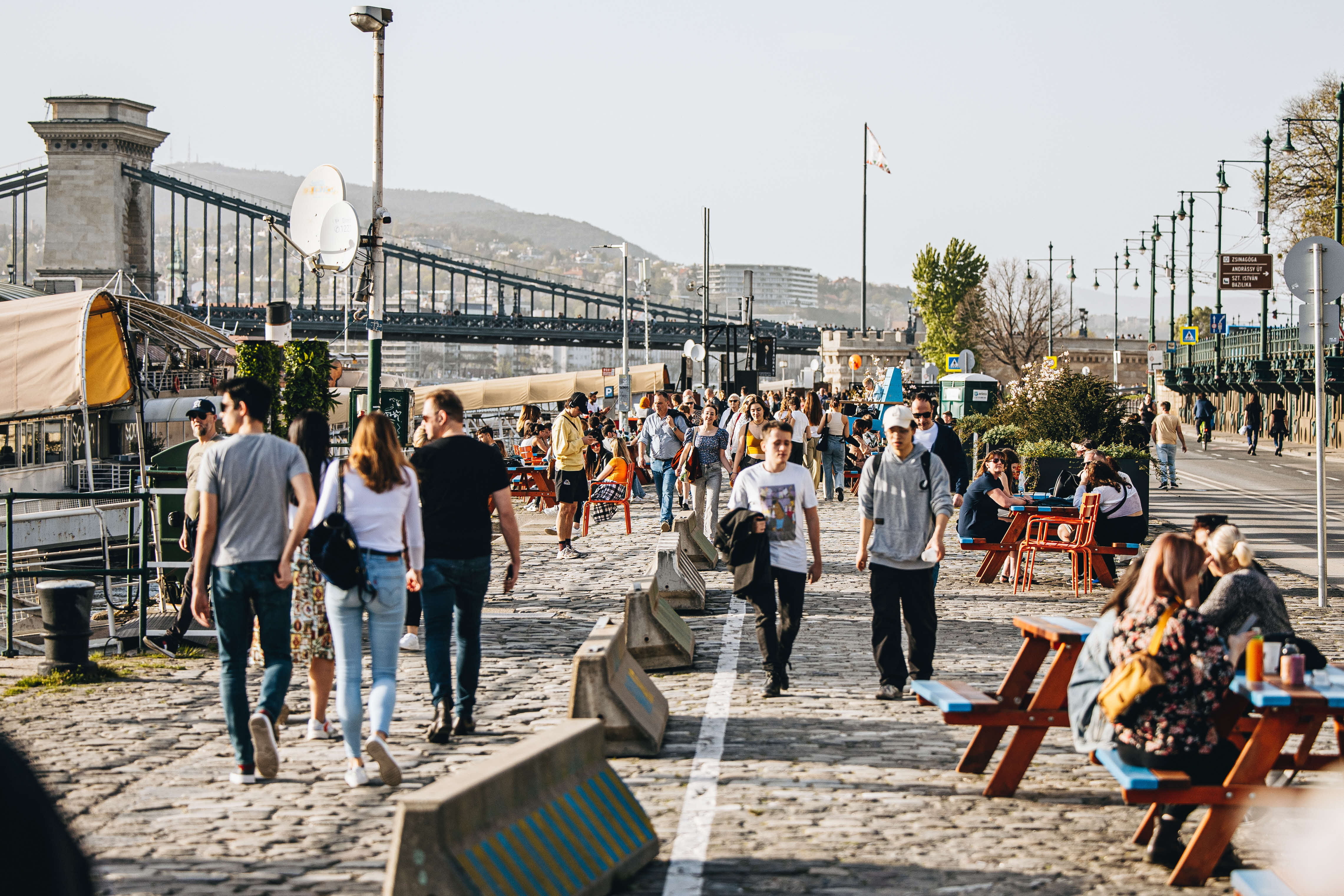 Budapest demonstrates meaningful urban transformation with limited resources through strategic innovation and community-centred planning. © Municipality of Budapest
BUDAPEST is recognised for demonstrating how meaningful urban transformation can be achieved with limited resources. As a historic European capital of over 1.7 million residents, Budapest has optimised strategic innovation, tactical urbanism, and community-centred planning to achieve urban transformation, despite limited financial means and decision-making authority. The city’s remarkable achievements in integrating transport systems both physically and digitally, alongside its success in creating vibrant public spaces and adopting the Healthy Streets programme, reflect strong creativity and a commitment to improving liveability for all citizens.
Integrated Transport and Digital Mobility Innovation
Budapest’s transport system represents an exemplary model of integrating multiple transport modes and the use of digital innovation to create convenient travel. The transport network is anchored by the successful unification of previously fragmented old tram lines into a modernised seamless tram network both physically and digitally. This achievement required connecting systems originally built by different companies into continuous north-south routes with modernised accessibility across both the Buda and Pest sides of the city, creating unprecedented connectivity for residents and visitors.
Multi-modal integration hubs such as Szell Kalman Square have been upgraded into efficient transport nodes linking trams, metro, buses, cycling, and pedestrian networks, creating efficient transfer points that enhance overall system performance. The city’s M4 metro line exemplifies how well-designed infrastructure can catalyse broader urban transformation, with its automated east-west connection significantly increasing ridership while spurring comprehensive regeneration around stations and improving walkability throughout surrounding areas.
The BudapestGO app serves over 1.4 million monthly users (78% of population) by integrating all transport modes and expanding beyond mobility to include broader city information services. This unified digital platform provides an instructive model for other cities seeking to integrate complex transport networks through technology while enhancing citizen experience across multiple municipal services.
Strategic Infrastructure Transformation: Envisioning Urban Connectors for Future Generations
This institutional innovation enables the systematic implementation of over 350 hectares of Ring Parks, including Ringpark West, Ringpark Het Schijn, and Ringpark Lobroekdok, delivering approximately 15km of cycling infrastructure while reconnecting previously divided neighbourhoods. Meticulous attention to detail such as narrower streets designed to slow traffic and physically separated bike lanes illustrate the city’s emphasis on safety and usability at a fine-grain level.
The ongoing Big Link project demonstrates how a long-contested infrastructure project can be reshaped to align with local priorities, with many groups that initially opposed the scheme now actively participating as its benefits become visible. The Via Sinjoor corridor improvements intend to integrate community priorities across Astridplein, Meir, Wapper, and Groenplaats, demonstrating how infrastructure can unite rather than divide urban areas.
Tactical Urbanism and Community-Driven Innovation
Budapest excels in adapting incremental, low-cost interventions to transform public spaces and quickly uplift neighbourhood environments. The city’s approach centres on public space reclamation, converting streets and car parks into pedestrian-priority environments, balancing everyday functionality with opportunities for recreation and community use. The car-free Danube Embankment exemplifies this flexibility, incorporating dual-use functionality that allows for recreational use on weekends and during summer whilst maintaining suburban access on weekdays. Similarly, the Chain Bridge now prioritises public transport and cycling exclusively.
The city’s evolution from having limited public spaces to creating an extensive network of vibrant community areas has been achieved through effective consultative approaches and participatory planning processes that engage residents meaningfully in shaping their neighbourhoods. The participatory budgeting programme demonstrates how citizen engagement can produce tangible neighbourhood improvements while ensuring municipal resources are allocated to community priorities.
Environmental Transformation and Climate Innovation
Budapest has achieved significant environmental transformation through its long-term commitment to ecological resilience and public health. The Danube River, previously severely contaminated, has been restored to swimmable condition through the implementation of a comprehensive sewage processing plant, demonstrating a dramatic reversal from years of environmental decline. Complementary green infrastructure initiatives, including the development of Pünkösdfürdő Park and the expansion of green infrastructure to over 2,500 hectares through cost-effective interventions that integrate flood control and maximise community impact.
Despite the city’s progress, it faces several constraints that limit its ability to fully build upon recent improvements. A shortage of affordable housing, the city’s approach to land use planning, densification and height control and fragmented district-level governance framework makes it difficult to address demand comprehensively. Persistent funding uncertainty and limited municipal autonomy also challenge long-term planning and delivery.
Budapest’s proven ability to deliver transformative results through strategic implementation, community engagement, and institutional creativity serves as an inspiring model for cities worldwide seeking to create urban improvements but are constrained by limited financial resources. Its approach to integrated mobility, participatory planning, tactical urbanism, and ecological renewal positions the city as an inspiring global example of resilient and resource-efficient urban development. O